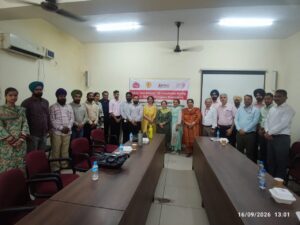
Ludhiana, 18 September (Rajkumar Sathi). A training program on ‘Pediatric TB Guidelines: Diagnosis and Management’ was organized in Ludhiana with the objective of promoting timely identification, accurate diagnosis, appropriate treatment and prevention of tuberculosis (TB) among children. The program was organized by World Health Partners (WHP) and SAATHII in collaboration with the District TB Cell, with significant support from PPSA Punjab. More than 60 pediatricians, medical officers, community health officers, staff nurses and other healthcare workers from Ludhiana district participated in the training program. The program was inaugurated by Dr. Ramandeep Kaur, Civil Surgeon, Ludhiana, who emphasized the important role of healthcare workers in achieving India’s TB elimination goal. She highlighted that timely diagnosis and early treatment of TB in children are essential for reducing disease-related complications and preventing the spread of TB. Dr. Satish Pundir, State Technical Manager, WHP Punjab, provided an overview of the current situation of pediatric TB in Punjab and key operational priorities under the National Tuberculosis Elimination Programme (NTEP). Dr. Ashish Chawla, District TB Officer, Ludhiana, highlighted the TB situation in the district and briefed participants on current diagnostic procedures under NTEP, including molecular tests such as CBNAAT and Truenat, as well as treatment strategies. Dr. Ruby Singh, Professor, Department of Pediatrics, Christian Medical College, Ludhiana, conducted a technical session on the diagnosis and management of extrapulmonary TB in children. She emphasized the importance of comprehensive clinical examination, accurate diagnostic assessment and appropriate investigations as required. Dr. Jaskaran Singh Bhasin provided detailed information on the various symptoms of pediatric TB, clinical and microbiological investigations, and diagnosis. He also sensitized participants about the importance of weight-based fixed-dose combination (FDC) medicines available for children. Dr. Prabhjit Samra, WHO Consultant, Punjab, discussed the importance of TB Preventive Treatment (TPT) and preventive treatment options such as 3HP, 3RH and 6H for eligible children and at-risk groups. He stressed the need for screening household contacts of TB patients, particularly children and other vulnerable members, and providing TPT to those who are eligible. The workshop highlighted that timely identification, accurate diagnosis, appropriate treatment, TB preventive treatment and improved coordination between the public and private healthcare sectors are essential for effective pediatric TB control. The organizers stated that such capacity-building programs play a significant role in familiarizing healthcare workers with updated guidelines for TB diagnosis and treatment and improving the identification, treatment and prevention of TB among children. They further emphasized that collective efforts by healthcare departments, medical experts, partner organizations and healthcare workers can contribute significantly towards accelerating the goal of TB elimination in Punjab and across the country.
About Post Author
